

Why Truck Accidents Near Chicago’s O’Hare Area Are So Dangerous
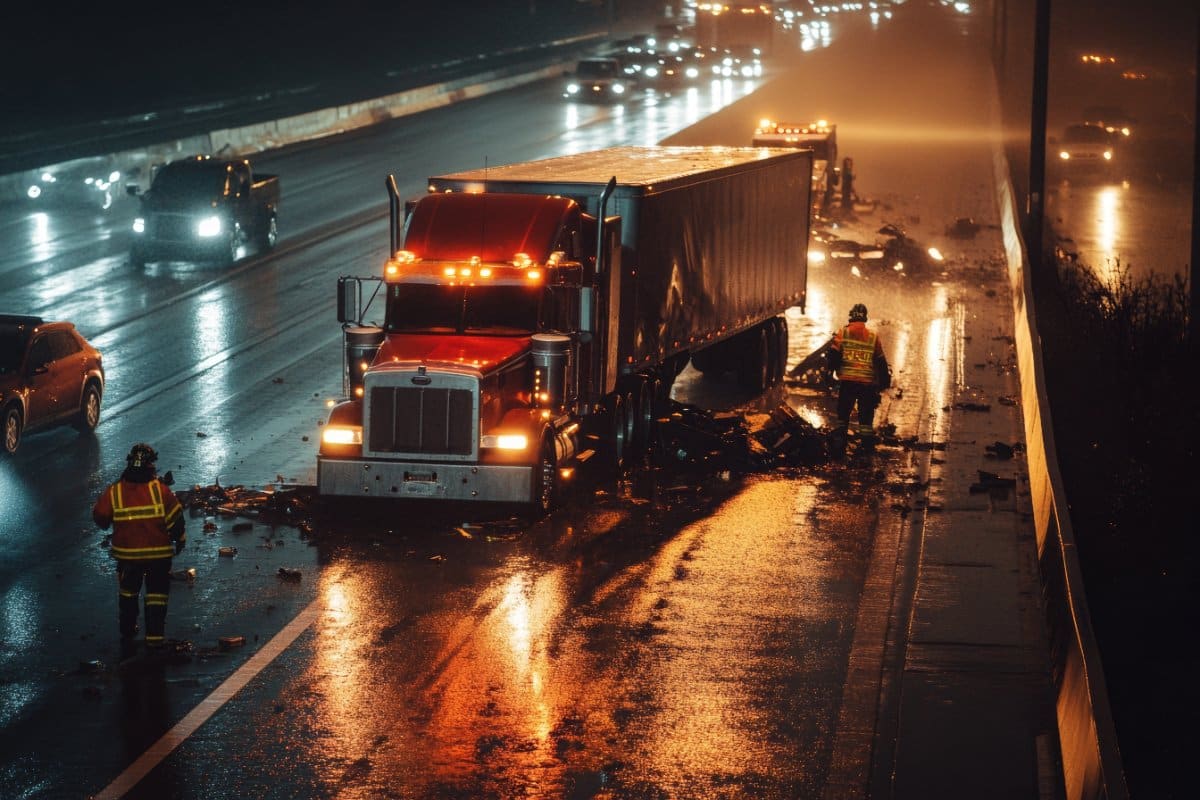 O’Hare International Airport in Chicago is one of the busiest airports in the country. In addition to transporting millions of passengers each year, the airport transports more than 2 million metric tonnes of cargo annually. Trucks regularly unload and load freight at the airport. Many of the roads near O’Hare Airport that these trucks use also have commercial and delivery trucks that use these roads for deliveries to other destinations.
The combination of heavy truck traffic with drivers who are trying to get to and from O’Hare International Airport makes truck accidents in the O’Hare area dangerous. At Gainsberg Injury and Accident Lawyers, we have more than 20 years of experience holding truck drivers and trucking companies liable for the accidents they cause.
Our Chicago truck accident lawyers seek compensation for economic and non-economic damages (such as pain and suffering) for victims of truck crashes. Call us today if you were in a truck accident at or near O’Hare International Airport.
What roads do truck drivers take to get to and from O’Hare Airport?
Some of the main truck routes that can be used to travel to and from O’Hare International Airport include the following:
- The Kennedy Expressway (I-90/I-94) connects downtown Chicago to O’Hare International Airport via I-190
- I-290 (known as the Eisenhower Expressway)
- I-90 (an east-west route)
- I-94 (a north-south route)
- I-55 (connects downtown Chicago with Chicago’s southwestern suburbs)
- I-57
- I-65
- I-80
- I-88
- I-294 (This tollway links to I-90 and I-490)
- I-355 (known as the Veterans Memorial Tollway)
- IL 390 (Illinois Route 390 Tollway)
- I-490 (under construction; full O’Hare access is scheduled for completion in 2027)
- The Dan Ryan Expressway
Trucks use these routes to make local deliveries throughout Chicago and to deliver goods to locations throughout Illinois and other states.
Other roads that serve O’Hare International Airport:
- Touhy Avenue
- Irving Park Road
- Franklin Avenue
- Higgins Avenue
Passengers, according to Fly Chicago, can use the following public transportation routes to arrive at or leave O’Hare.
- CTA Blue Line
- Metra North Central Service
- Pace Buses
How busy is O’Hare Airport?
According to Forbes, nearly 72 million passengers flew into or out of O’Hare International Airport between January and October 2025.
According to FlyChicago, O’Hare averaged about 1,161 daily nonstop flights to 195 U.S. cities and about 128 daily nonstop flights to 62 international destinations as of September 2026.
What types of trucks use O’Hare Airport?
Vehicles that use O’Hare Airport include cars, buses, rideshare vehicles, taxis, limos, rental cars, and public transport (trains and buses).
Freight/cargo trucks that use O’Hare Airport include special freight trucks that handle airline cargo, smaller trucks, storage trucks (for airline warehouses), and delivery/courier trucks.
Other types of trucks that use the same roads that airport trucks use include semis, rigs, tractor-trailers, and 18-wheelers.
What factors make driving trucks at or near O’Hare International Airport dangerous?
At Gainsberg Injury and Accident Lawyers, we work with different types of liability experts and through the formal discovery process to show why truck accidents happen and who is responsible.
According to the National Highway Traffic Safety Administration (NHTSA), in 2023, 5,472 people nationwide died, and an estimated 153,452 people were injured in crashes involving large trucks.
Some of the reasons that truck accidents happen at or near O’Hare include the following:
- Cargo that is not properly secured or is overloaded. Cargo that shifts or is too heavy can cause a truck driver to lose control of the truck or cause the cargo to spill onto the highway.
- Driver fatigue. Many truck drivers are tired because they work long hours. Truck drivers may need extra time to unload and make deliveries at O’Hare. Heavy traffic around O’Hare can mean more time is necessary to make deliveries.
- Pressure from the shippers. Tight schedules can cause truck drivers to speed, tailgate, and drive recklessly. All of these actions can increase the risk of a catastrophic truck accident.
- Congestion. Heavy traffic increases the risk of truck accidents because vehicles are close to each other, drivers are tempted to move into other lanes, and driving in heavy traffic can be exhausting. Driving a truck in congested traffic increases the risk of rear-end accidents.
- Blind spots. Trucks have poor visibility lines along their sides and in the rear. Truck drivers who pass, merge, or change lanes to enter or exit a highway need to use extra caution (and the latest technology) to turn safely.
- Construction. There’s often construction near O’Hare due to the wear and tear heavy traffic and heavy trucks place on roads. Construction often means moving into other lanes, detours, and even road closures.
- Difficulty turning. Trucks need more room to complete their turns. Truck drivers who make wide turns often need to enter other lanes of travel.
- Backing out. Trucks that make deliveries to and from O’Hare need to ensure that they back out into traffic safely, such as using a spotter or camera technology.
- Defective truck parts. We hold manufacturers, distributors, and others in the supply chain accountable when defective hydraulic systems, brakes, tires, or other truck parts cause accidents.
- Bad weather. Driving trucks or driving near trucks can be especially dangerous when it rains, it’s foggy, it’s too sunny, or when the snow, ice, and high Chicago winds make driving treacherous. Poor weather can cause rollovers, jackknifes, and other types of dangerous and deadly truck accidents near O’Hare International Airport or anywhere in Chicago.
- Other causes of truck accidents include:
o Driving under the influence of drugs or alcohol
o Distracted driving, such as using a GPS to see the best routes to take into and out of O’Hare.
o Underride accidents, especially if trucks are not equipped with rear-safety guards.
o Faulty inspections, maintenance, and repairs.
What regulations govern truck driving at O’Hare Airport?
At Gainsberg Injury and Accident Lawyers, we work to show what violations of federal and local trucking laws may have caused your accident. Some of these regulations and other relevant sources of evidence include the following:
- Hours of service laws
- Loading and unloading regulations
- Electronic logging device (ELD) requirements
- Event data recorder or electronic control module information, where available and applicable
- Weight and size laws
- Many other laws and regulations
What types of injuries do truck accidents cause in Chicago?
Truck accidents often cause catastrophic, permanent, and severe injuries due to the large weight and size of trucks, especially if the truck has a full load of cargo.
Our Chicago O’Hare truck accident attorneys handle all types of personal injuries, including:
- Traumatic brain injuries
- Spinal cord damage, including paralysis
- Traumatic amputation
- Fractures/broken bones
- Burns
- Back injuries
- Tissue injuries
- Organ damage
- Nerve, muscle, ligament, and tendon damage
- Scarring and disfigurement
We also file wrongful death claims when a truck accident at or near O’Hare International Airport is fatal.
Contact our Chicago O’Hare Airport truck accident lawyers now
When your trip to O’Hare International Airport turns into a nightmare due to a truck accident, Gainsberg Injury and Accident Lawyers is ready to help. We’ll quickly send investigators to the accident site, examine what happened, and fight for all the compensation you deserve. Our Chicago truck accident lawyers understand the many complex issues that truck accident claims involve.
Call us or fill out our contact form to schedule a free consultation. Our lawyers handle truck accident cases on a contingency fee basis.

Attorney Neal Gainsberg has spent the last 20+ years fighting to protect the rights of the injured in Chicago and throughout Illinois. For dedicated legal help with a personal injury, car accident, or wrongful death matter, contact Gainsberg Injury and Accident Lawyers in Chicago for a free consultation.